
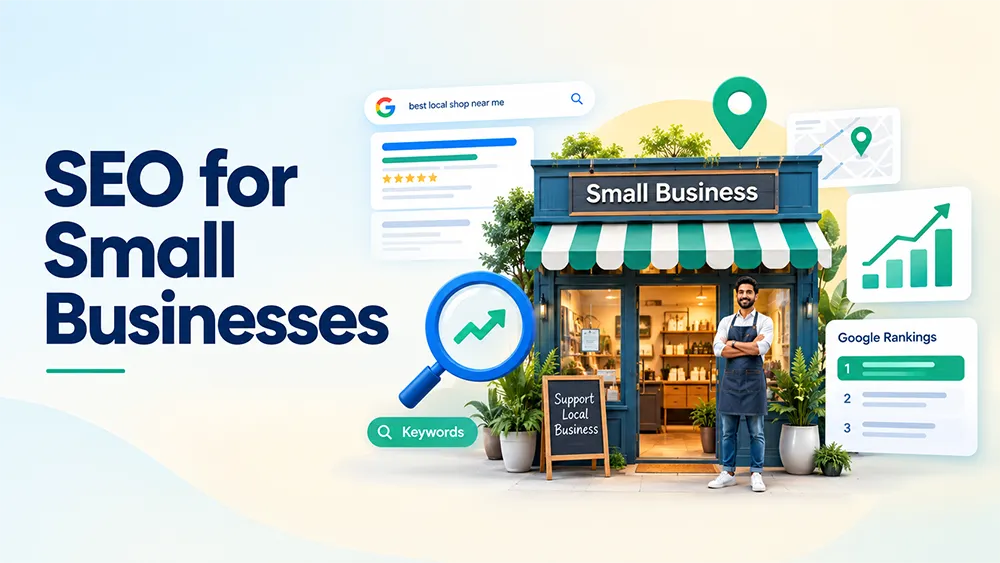
SEO for small businesses helps companies improve their visibility on Google, attract relevant website visitors, and reach potential customers searching for their products or services.
Search engine optimization gives smaller companies an opportunity to compete online without relying entirely on paid advertising. With the right strategy, even a business with a limited marketing budget can build a stronger online presence over time.
This guide explains why SEO matters, ten practical strategies to improve rankings, the tools worth using, and the mistakes to avoid. It also covers performance measurement, agency support, and the costs of SEO for small businesses.
- Why Is SEO Important for Small Businesses?
- 10 Essential SEO Strategies for Small Businesses
- Best SEO Tools for Small Businesses
- Common SEO Mistakes Small Businesses Should Avoid
- How to Measure SEO Success for a Small Business
- Should You Hire a Professional Small Business SEO Agency?
- Closing Thoughts on Small Business SEO
- Looking for an SEO Company for Your Small Business Website?
- Frequently Asked Questions About SEO for Small Businesses
Why Is SEO Important for Small Businesses?
Search engine optimization is not just a digital trend. It is an essential foundation for sustained commercial success in modern markets. Small companies often operate with lean marketing budgets, making organic search one of the highest-returning channels available.
Increases Online Visibility
When potential buyers search for services or products online, they rarely look past the first page of search results. Implementing a targeted strategy for small business SEO ensures that your website appears directly in front of buyers at the precise moment they express intent. Increased online visibility keeps your brand top of mind in your local or regional market.
Attracts Relevant Website Traffic
Unlike broadcast advertising or cold outreach, search engine optimization captures inbound demand. Visitors arriving through organic search are actively seeking specific solutions, answers, or products. By targeting specific intent, your website attracts higher-quality visitors who are already pre-qualified and far more likely to engage with your business.
Builds Credibility and Trust
Consumers view top Google rankings as a mark of industry trust and authority. Achieving a strong presence on search results pages signals to prospects that your business is reputable, established, and recommended. When combined with clear website messaging and positive customer reviews, organic visibility reinforces consumer confidence.
Generates Leads and Sales
A well-optimized website functions as a round-the-clock sales conversion tool. By guiding users smoothly from informational search queries to clear service pages, search optimization directly increases phone inquiries, quote requests, online bookings, and storefront visits.
Helps Compete with Larger Businesses
Large corporations may possess massive advertising budgets, but search engines prioritize local relevance, user experience, and targeted content quality. A well-optimized local business can easily outperform national competitors in specific geographic markets by focusing on localized search intent and niche expertise.
Supports Long-Term Marketing Growth
Paid ad campaigns stop generating leads the moment your ad spend pauses. In contrast, search engine rankings built through consistent technical improvements and quality content creation deliver compound returns over time. Every page you optimize continues to attract traffic month after month without incremental costs.
10 Essential SEO Strategies for Small Businesses
To build lasting organic visibility, small business owners need a structured and actionable strategy. These ten practical steps cover the full spectrum of modern search engine optimization.
1. Conduct Keyword Research
Effective search optimization begins with understanding the exact phrases potential customers type into Google.
- Find Customer Keywords: Identify terms related to your primary products, services, industry standards, and buyer pain points. Focus on terms that reflect immediate purchase intent as well as research-focused questions.
- Evaluate Search Intent: Analyze search intent, keyword difficulty, and realistic ranking opportunities. Avoid targeting overly broad, hyper-competitive terms when higher-converting niche phrases are available.
- Target Long-Tail Phrases: Prioritize long-tail keywords alongside your primary focus terms. Long-tail queries usually have lower search volume but carry significantly higher conversion rates due to their specific intent.
2. Optimize Your Website Pages
On-page optimization tells search engine crawlers exactly what your pages are about while providing clear information to human visitors.
- Craft Strong Title Tags and Meta Descriptions: Write descriptive, compelling title tags and meta descriptions for every page. Keep titles within 60 characters and descriptions under 160 characters to avoid truncation in search snippets.
- Incorporate Focus Keywords Naturally: Integrate your focus keyword naturally into main headings, body text, image tags, and page URLs. Avoid forced repetition or artificial phrasing.
- Optimize Key Conversion Pages: Dedicate distinct, fully optimized landing pages to each primary service or product line rather than combining everything onto a single crowded page.
3. Invest in Local SEO
For businesses serving a specific geographic area, local SEO services for small business growth are critical to winning nearby customers.
- Optimize Google Business Profile: Claim, verify, and complete your Google Business Profile. Fill out every section, including primary categories, business descriptions, operational hours, and service listings.
- Maintain NAP Consistency: Ensure your business Name, Address, and Phone number (NAP) details are identical across your website, social profiles, business directories, and local citation platforms.
- Build Local Citations: List your business on reputable local directories and niche industry platforms. Publish location-specific content to signal strong regional relevance to search engines.
- Gather and Respond to Customer Reviews: Encourage satisfied clients to leave authentic Google reviews. Respond professionally to all feedback, demonstrating active customer care and community involvement.
4. Create Helpful, Search-Focused Content
Search engines prioritize websites that consistently publish original, high-value information that solves real user problems.
- Answer Pre-Purchase Questions: Focus content around common customer inquiries, cost considerations, process breakdowns, and detailed product comparisons.
- Publish Diverse Content Formats: Develop informative blog articles, clear service landing pages, practical buying guides, and dedicated FAQ sections.
- Align Content with Intent: Match each piece of content strictly to informational, commercial, or transactional search intent so visitors find the exact depth of detail they expect.
- Maintain Existing Content: Audit and update published articles regularly to ensure all factual references, industry guidelines, statistics, and internal links remain current.
5. Improve Website Speed and Mobile Usability
User experience plays a direct role in how search engines rank pages. Slow, non-responsive sites lose both rankings and sales.
- Ensure Mobile Responsiveness: Use responsive website design so layouts adjust seamlessly across smartphones, tablets, and desktop displays.
- Optimize Visual Assets: Compress large image files, utilize modern image formats like WebP, and eliminate unnecessary visual plugins or scripts.
- Enhance Core Web Vitals: Address loading performance, interactivity delays, and visual layout shifts to provide a smooth browsing experience.
6. Fix Technical SEO Issues
Technical optimization ensures search engine spiders can easily crawl, understand, and index your website content without encountering obstacles.
- Ensure Crawlability and Indexability: Keep critical pages accessible to search engine crawlers while blocking low-value administrative or duplicate URLs.
- Maintain Sitemaps and Directive Files: Generate and submit an updated XML sitemap through search console tools, and maintain a clean robots.txt file with correct canonical tags.
- Resolve Technical Errors: Routinely inspect your site for broken 404 links, redirect loops, server timeouts, and duplicate content issues.
- Implement HTTPS Security: Maintain site-wide SSL encryption (HTTPS) to protect user data and maintain required Google security standards.
7. Build High-Quality Backlinks
Backlinks from authoritative, relevant websites act as digital votes of confidence, signaling to search engines that your site is trustworthy.
- Earn Organic Backlinks: Acquire external links naturally by publishing valuable industry insights, practical tools, local community guides, or original research.
- Utilize Reputable Directories: Secure citations from recognized business associations, official industry groups, local chambers of commerce, and established directory platforms.
- Prioritize Quality Over Quantity: Focus on earning links from authoritative, contextually relevant sites rather than accumulating high volumes of low-quality directory links.
8. Strengthen Internal Linking
A well-planned internal linking structure helps search engines crawl your site logically while keeping human users engaged longer.
- Connect Related Pages: Link contextual blog articles directly to relevant core service pages and related landing resources.
- Use Descriptive Anchor Text: Choose descriptive, natural anchor text that clearly indicates the topic of the linked destination page.
- Guide Visitor Journeys: Use strategic links to lead readers step by step from informational blog posts toward high-converting contact and quote pages.
9. Optimize Images and Other Media
Rich visual media enhances user engagement, but unoptimized files can drastically slow down your web pages.
- Use Descriptive File Names: Rename image files with clear, descriptive words before uploading them to your web server.
- Add Contextual Alt Text: Write concise alt text for images to improve website accessibility and help search engines understand visual content.
- Balance Quality and Compression: Use modern compression tools to minimize file sizes while retaining clear visual quality.
10. Monitor Performance and Update Your SEO Strategy
Search optimization is an ongoing process of monitoring, refinement, and adjustment based on real performance data.
- Track Key Performance Metrics: Monitor keyword visibility, organic search traffic, lead inquiries, click-through rates, and conversion numbers using web analytics.
- Identify Underperforming Content: Pinpoint pages experiencing traffic drops or low engagement, and update them with refreshed information and improved layout design.
- Adapt to Data: Base ongoing website updates on verified traffic trends, user interaction metrics, and conversion outcomes rather than temporary ranking fluctuations.
Best SEO Tools for Small Businesses
Managing search engine optimization for small businesses efficiently requires the right set of tools. Fortunately, many powerful platforms offer free or cost-effective tiers tailored for small operations.
Google Business Profile
A foundational tool for local business visibility. It allows business owners to manage how their company appears on Google Maps and local search panels, handle customer reviews, and share operational updates.
Google Search Console
Essential free software from Google that monitors site indexing status, tracks real organic keyword performance, highlights technical crawling errors, and shows backlink data.
Google Analytics 4
Google’s core web analytics platform. It provides detailed insight into website traffic sources, user behavior patterns, popular landing pages, and lead conversion metrics.
Google Keyword Planner
A free research tool inside Google Ads that helps business owners identify search term volume trends, discover related keyword ideas, and evaluate commercial user intent.
PageSpeed Insights
A specialized Google performance tool that measures website loading speed on mobile and desktop devices while offering practical technical suggestions to improve Core Web Vitals.
Ahrefs
An industry-standard SEO suite that excels at backlink profile analysis, site audit tracking, competitive research, and comprehensive keyword discovery.
Semrush
A popular marketing platform offering robust tools for rank tracking, on-page optimization ideas, technical audit reports, and competitor advertising insights.
Yoast SEO
A widely used WordPress plugin that simplifies meta tag management, XML sitemap generation, content readability analysis, and basic schema markup implementation.
Rank Math SEO
A feature-rich WordPress plugin offering automated schema management, internal link suggestions, Google Search Console integration, and granular on-page recommendations.
Common SEO Mistakes Small Businesses Should Avoid
Navigating search optimization effectively means avoiding common pitfalls that can waste resources or harm your organic performance.
Targeting Keywords That Are Too Competitive
Targeting broad, highly competitive keywords can make it difficult for small businesses to rank against established websites. Instead, focus on specific, long-tail keywords that match your services and customer needs. Research keyword difficulty and search intent to identify realistic opportunities that can attract relevant traffic and potential customers.
Ignoring Local Search Opportunities
Without local SEO, your business may miss customers searching for services in your area. Optimize your Google Business Profile, include relevant location-based keywords in website content, and maintain consistent business details across online directories. Encourage genuine customer reviews to strengthen your local presence and help potential customers find and trust your business.
Publishing Thin or Duplicate Content
Pages with little useful information or repeated content may fail to meet searchers’ needs and provide limited value. Create original, informative content that answers customer questions and explains your services clearly. Give each page a distinct purpose, update outdated information, and improve existing content rather than publishing multiple pages with similar or superficial details.
Buying Spammy Backlinks
Buying bulk backlinks from unreliable providers can violate Google’s spam policies and put your website’s rankings at risk. Avoid automated link-building packages and prioritize relevant links earned through valuable content, genuine business relationships, and industry contributions. Review your backlink profile periodically and choose link-building methods that support your website’s long-term credibility.
Overusing Keywords in Website Content
Repeating keywords unnaturally throughout your content can make pages difficult to read and may constitute keyword stuffing. Use your primary keyword in relevant places, including headings and page titles, where it fits naturally. Incorporate related terms when useful, and prioritize clear, helpful content that answers your audience’s questions without unnecessary repetition.
Neglecting Technical Issues and Mobile Experience
Slow loading speeds, broken links, indexing errors, and poor mobile layouts can affect website usability and SEO performance. Audit your website regularly using Google Search Console and PageSpeed Insights. Fix technical errors, optimize images, and ensure pages display correctly on smartphones and desktops so visitors can navigate your website without difficulty.
Expecting Immediate SEO Results
SEO takes time, and expecting instant rankings can lead small businesses to abandon their strategy too early. Results depend on competition, website condition, content quality, and ongoing optimization. Set realistic goals, publish useful content consistently, address technical issues, and review performance regularly. Focus on steady improvements rather than shortcuts promising immediate results.
How to Measure SEO Success for a Small Business
Tracking the right metrics ensures your optimization efforts remain aligned with actual revenue growth and business objectives.
Organic Search Traffic
Track the total volume of visitors arriving at your site through unpaid search results. Steady growth in organic traffic signals improving overall site visibility.
Keyword Rankings and Search Impressions
Monitor impression volume and position trends for your target keywords. Increased impressions indicate that search engines are showing your pages for more user queries.
Click-Through Rate
Evaluate your click-through rate (CTR) in search results. A low CTR on high-ranking pages suggests your title tags or meta descriptions need compelling updates to entice clicks.
Leads, Calls, and Conversions
Measure actionable business outcomes like phone calls, contact form submissions, quote requests, and store visits generated by organic visitors.
Organic Revenue and Return on Investment
Calculate net revenue generated from organic search against your overall SEO expenditure to ensure your strategy delivers positive long-term return on investment.
Should You Hire a Professional Small Business SEO Agency?
Hiring a professional SEO agency can help small businesses improve Google rankings, attract qualified traffic, and generate more leads without managing every aspect of SEO in-house. An experienced team can identify ranking opportunities, fix website issues, optimize important pages, and develop a strategy around your business goals.
Professional SEO services for small businesses are particularly useful when your website receives little organic traffic, your competitors rank higher for valuable keywords, or your team lacks the time and expertise to manage ongoing optimization.
Before hiring an agency, consider its experience with small businesses, approach to keyword research, local SEO capabilities, reporting process, and ability to connect SEO performance with measurable results. Choose a team that offers a clear strategy, realistic expectations, and transparent reporting rather than promising instant rankings.
If you have limited resources, an agency can also help prioritize high-impact tasks so you can focus your budget on the SEO improvements most likely to benefit your business.
Closing Thoughts on Small Business SEO
Search engine optimization is one of the most effective, scalable investments a small enterprise can make. By building online authority, optimizing technical performance, and delivering helpful content, your business creates an enduring digital asset that generates leads reliably over time.
Begin by conducting clear keyword research, securing your local Google profile, and systematically improving key service pages. Consistent, incremental progress yields significant search engine rankings over time.
Looking for an SEO Company for Your Small Business Website?
Apex SEO is a professional SEO company in Bangalore dedicated to helping small and medium businesses expand their online reach. Our expert team designs customized optimization strategies that drive qualified organic traffic and generate more qualified leads. Get in touch with us today to improve your website’s search visibility and attract more potential customers.
Frequently Asked Questions About SEO for Small Businesses
Clarifying common search engine optimization questions helps small business owners set realistic expectations and allocate marketing budgets wisely.
How Much Does Small Business SEO Cost?
The average cost of SEO for small business depends on the services required, industry competition, website size, and target market. Monthly retainers typically cost more when campaigns require extensive content creation, technical improvements, and competitive keyword targeting. Local SEO campaigns for businesses serving specific areas may require a smaller investment than national campaigns targeting competitive markets.
How Long Does SEO Take to Work for a Small Business?
Search optimization is an ongoing strategy rather than an overnight fix. Most small businesses begin seeing noticeable improvements in search visibility, local map rankings, and organic traffic within three to six months, with compounding results building over twelve months.
Can a Small Business Rank on Google?
Yes, small businesses can regularly outrank larger competitors on Google by focusing on localized search intent, niche service specialization, fast page loading performance, and highly relevant content that addresses customer needs directly.
Is SEO Worth It for a Small Business?
Yes, search engine optimization provides one of the highest long-term returns on investment among digital marketing channels. Unlike paid advertising, organic search visibility continues to attract prospective clients without ongoing pay-per-click costs.
Can I Do SEO for My Small Business Without Hiring an Agency?
Yes, business owners can manage fundamental SEO tasks independently. By using accessible tools like Google Search Console and Google Business Profile, you can optimize primary pages, create helpful content, and improve local visibility. As your business scales or market competition increases, seeking affordable SEO services for small businesses can help you expand your reach further.